Meet Rob: Why real operating scars matter in venture
M13 Partner and Head of Propulsion Rob Smith brings a depth of hard-earned founder and operator experience, partnering with M13 founders navigating this AI moment and focusing on what drives durable company performance over the long term.
.webp)
Table of contents
TLDR
Operator-led venture support from a founder with real-world experience
- Making better decisions faster. Rob helps founders drive higher conversion rates and shorter sales cycles.
- Good judgment beats rigid plans. The ability to make hard calls before the market forces them is a core advantage.
- There is no single path to entrepreneurship. A multi-time founder and AI pioneer, Rob has had a highly successful entrepreneurial journey based on resilience and hard work vs conventional pedigree.
Select areas of expertise:
- Sales & Revenue
- GTM
- Product
- Technology
Recent portco projects:
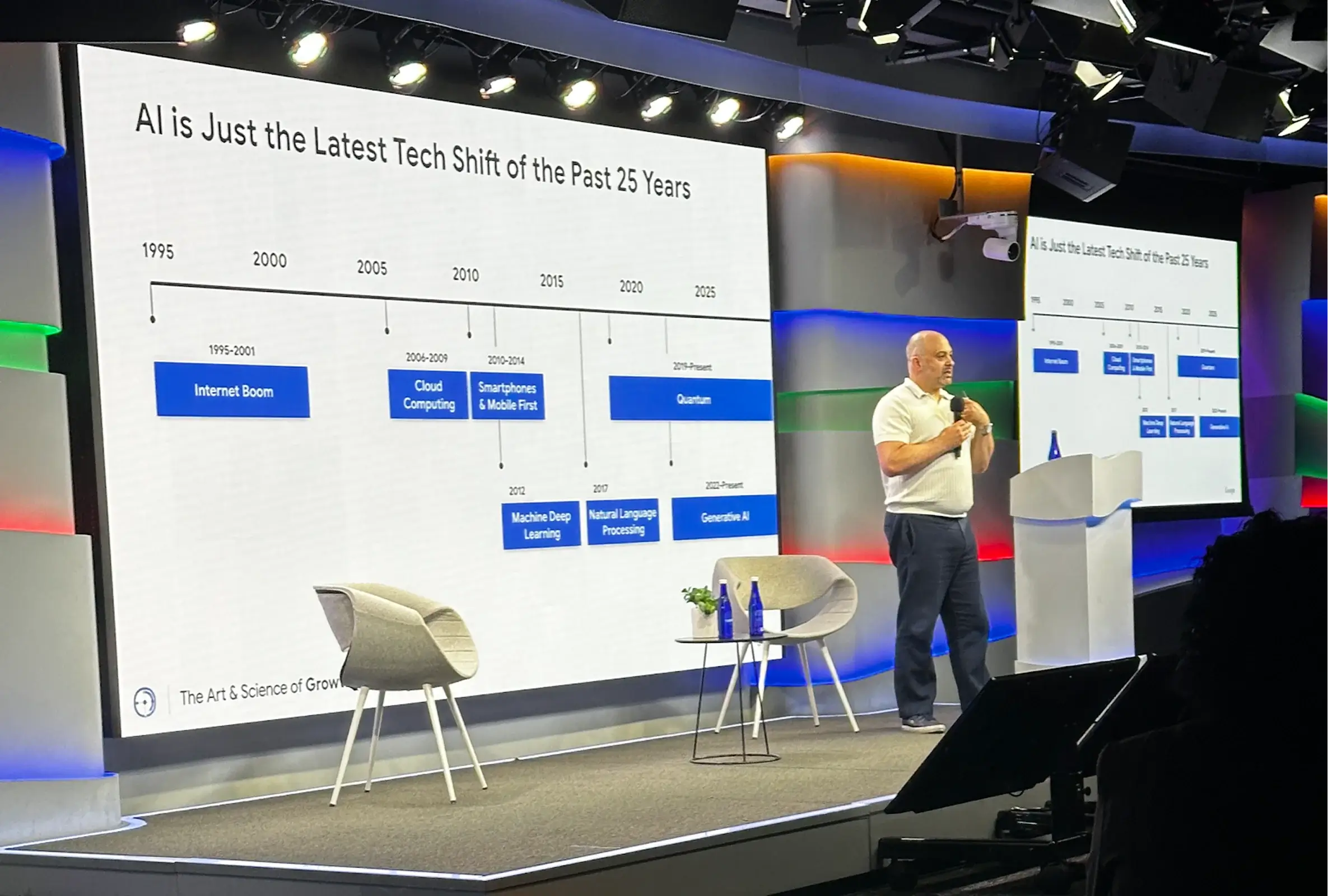
Rob Smith has had more jobs than anyone at M13, and that is precisely the point.
From lifeguard to tutor to photographer and filmmaker, Rob’s career defies the linear narratives often celebrated in venture capital. Long before joining M13 as Partner and Head of Propulsion, he was building companies in the real world, navigating payroll, pricing mistakes, customer churn, regulatory shocks – and even existential doubt.
M13 believes founders benefit from being around people who have built from the ground up, through chaos, and came out successfully on the other side. Rob works hands-on with founders across sales, marketing, pricing, technology, and product. He builds Sales Labs and Pricing Labs and coaches founders through everything from GTM strategy to judgment calls to simply getting through really hard days on the job. His impact shows up in conversion rates, shorter sales cycles, improved pricing discipline and is visible in long-term benefits: Scalable strategies, higher decision velocity and repeatable systems that result in enduring companies.
But it all starts with founder trust.
You’ve started many companies. Who was your first investor and how did you convince them?
One of my professors at university gave me 10 minutes to pitch my vision for a startup. Toward the end of the meeting, he asked for a business plan, which I agreed to deliver the next day.
I went home and Googled “what is a business plan?,” stayed up all night writing one, and handed it to him the next morning. When he handed it back a couple of days later, he had it covered in red corrections and attached a $30,000 check.
That moment taught me two things. First, most people are willing to help if you show effort and conviction. Second, you do not need to know everything to get started. You just need to be willing to adapt and learn quickly.
What are you helping founders with most at M13 today?
I oversee sales, marketing, pricing, product and technology support across our portfolio as well as lead our overall propulsion efforts and strategy. Because no two startups are the same, neither are their challenges, making the work everyday different and interesting.
The other part of my job is a founder therapist of sorts.
Founders deal with uncertainty, pressure and self-doubt even when things look good on the outside. Sometimes the work is tactical. Sometimes it is about helping someone slow down, zoom out and make a hard decision they have been avoiding.
I like working with messy problems. Situations where the idea is strong but the system is not quite there yet. Helping founders turn chaos into something organized, purposeful and repeatable is where I do my best work.
What’s the hardest decision founders wait too long to make?
Admitting that their strategy is simply not working and having the courage to change it. I’ve seen this issue across marketing, sales, product, and even business models.
Founders are not afraid of hard work. They can sometimes be afraid of letting go of a plan they have already invested heavily in and instead they double down. The companies that break through are willing to adjust their pricing, rethink product strategy, or approach go-to-market execution differently when a superior long-term opportunity emerges. Judgment and timing help teams make a hard call before the market decides it for them.
Tell us what your second start-up taught you about AI.
We started Pecabu in 2012. It was one of the early AI companies. We built a platform that analyzed millions of tweets to create real-time consumer profiles and tracked how people move throughout space and time.
We could determine if you owned a house, how much money you made, what products you liked, and your dining preferences. We used that data to power dynamic advertising, like deciding when Budweiser should run an ad during a baseball game based on the score or if a McRib promotion is best placed on this billboard or that one.
We were growing quickly and working with Coca-Cola, Google, McDonalds and Clear Channel. The technology worked. The demand was there.
In 2016, after the Cambridge Analytica scandal however, regulations in this space tightened. Our business model became untenable, forcing us to exit earlier than we had planned.
What I learned is that technology does not exist in isolation. You have to understand the broader context. Regulation, public trust, and market dynamics matter just as much as what you can technically build.
What’s a misconception about entrepreneurship?
That there is a “right path” to entrepreneurship and becoming a venture-backed founder.
For example, take me. I was a refugee. My parents are not college educated. I dropped out of two top math and engineering schools before finally getting my degree from the American University of Beirut. I moved to San Francisco to start a startup knowing virtually no one.
Despite that, I built two successful companies from the ground up. I helped dozens of others as a fixer CEO across biomedical, health, fintech, B2B SaaS and consumer companies.
Hard work and resilience matter more than background and privilege.
How can outsiders break into entrepreneurship and venture capital?
Walk into every room like you belong.
Approach networking like a night out. Introduce yourself to the biggest name at the party and start a conversation. Take huge risks and get very comfortable with rejection.
Most people give up too early. Persistence is under rated.

Read more about Rob
.webp)
The views expressed here are those of the individual M13 personnel quoted and are not the views of M13 Holdings Company, LLC (“M13”) or its affiliates. This content is for general informational purposes only and does not and is not intended to constitute legal, business, investment, tax or other advice. You should consult your own advisers as to those matters and should not act or refrain from acting on the basis of this content. This content is not directed to any investors or potential investors, is not an offer or solicitation and may not be used or relied upon in connection with any offer or solicitation with respect to any current or future M13 investment partnership. Past performance is not indicative of future results. Unless otherwise noted, this content is intended to be current only as of the date indicated. Any projections, estimates, forecasts, targets, prospects, and/or opinions expressed in these materials are subject to change without notice and may differ or be contrary to opinions expressed by others. Any investments or portfolio companies mentioned, referred to, or described are not representative of all investments in funds managed by M13, and there can be no assurance that the investments will be profitable or that other investments made in the future will have similar characteristics or results. A list of investments made by funds managed by M13 is available at m13.co/portfolio.
At a glance
There are no Cinderella stories. Blockbuster venture successes are always preceded by years of sleepless nights.”
There are no Cinderella stories. Blockbuster venture successes are always preceded by years of sleepless nights.”
—Sarah Tomolonius, M13 Partner & Head of Investor Relations


© 2026 M13. All rights reserved.


