How Nominal Is Changing Hardware Engineering and America's Ability to Build
Discover how Nominal's hardware intelligence platform brings AI to aerospace, defense and industrial engineering, and why M13 invested in its Series C.
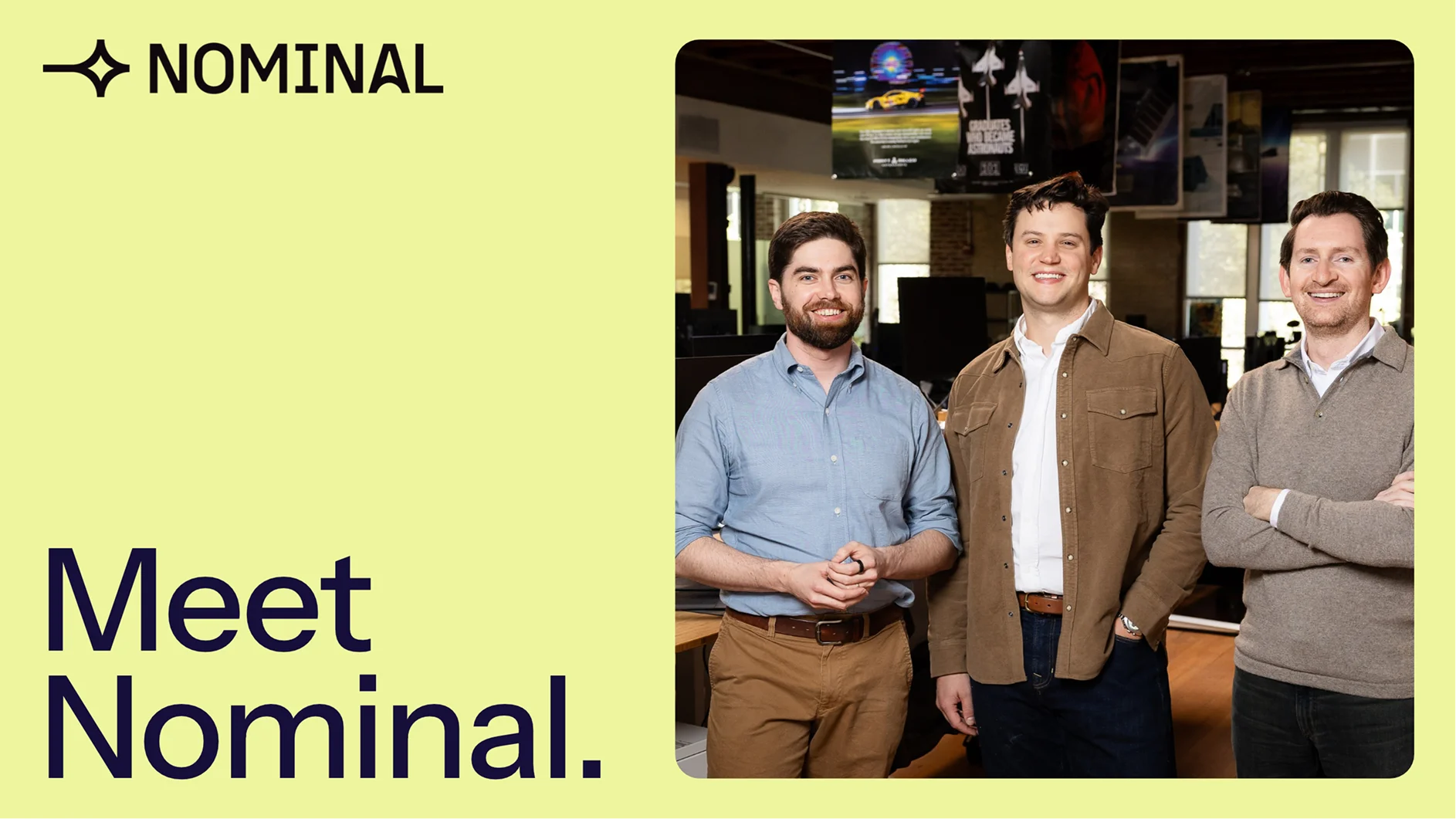
Table of contents
The distance between what frontier AI can do and what engineers can reliably use on a factory floor has never been wider. Nominal co-founder and CEO Cameron McCord sees it whenever he leaves a screen full of AI agents doing remarkable work and walks onto a manufacturing line or a test range, where engineers still stitch test data together by hand.
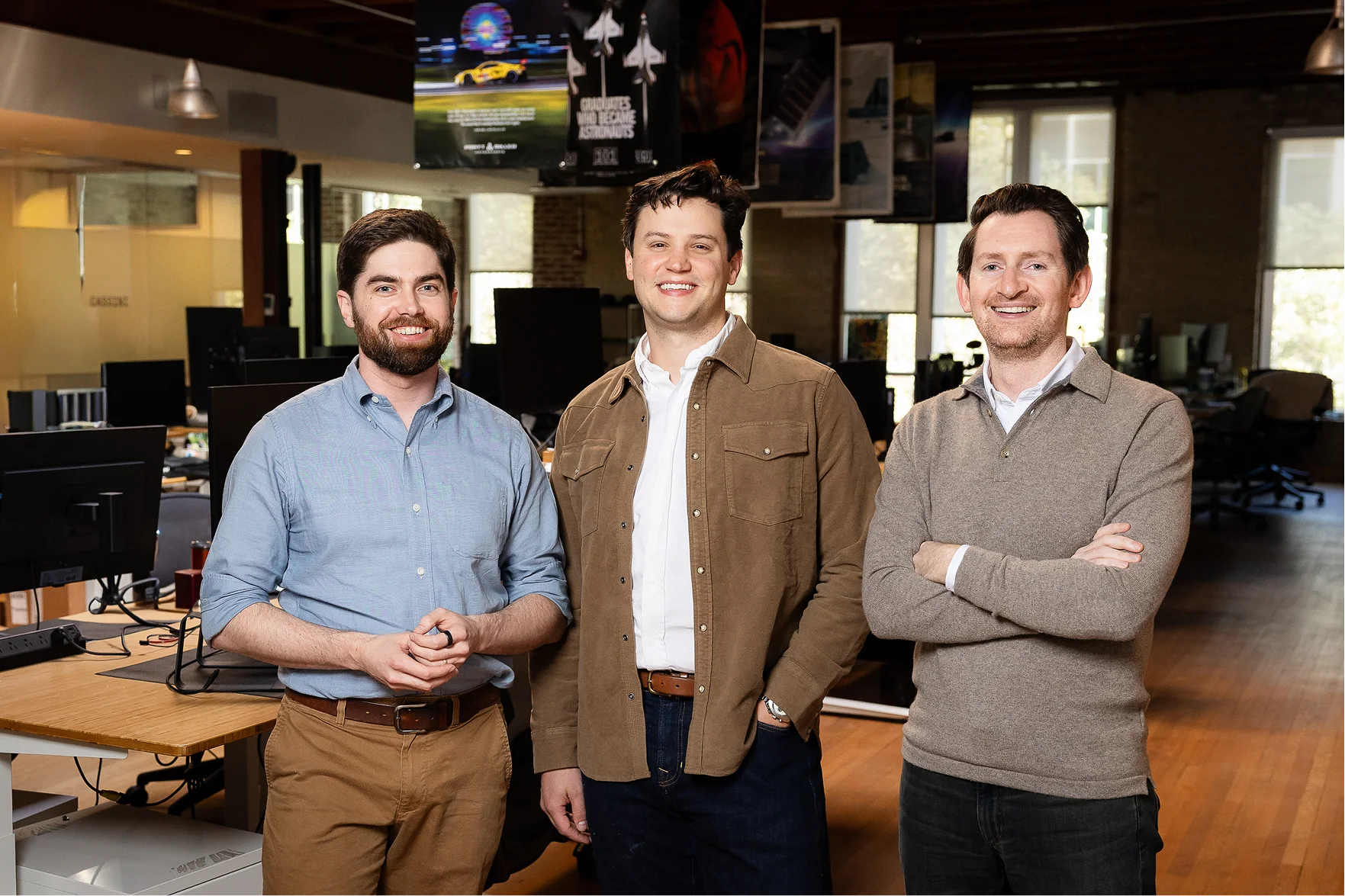
Nominal is built to close that gap. Its hardware intelligence platform connects engineering data with the context behind it and puts AI agents to work on top. Today, Nominal serves more than 80 government and commercial customers, including five of the seven largest U.S. defense contractors. Founded in 2022 by McCord, Bryce Strauss and Jason Hoch, Nominal raised a $240 million Series C at a $3 billion valuation.
TLDR
- Nominal raised a $240 million Series C at a $3 billion valuation.
- More than 80 government and commercial organizations use Nominal, including five of the seven largest U.S. defense contractors.
- At Anduril, more than 300 engineers use Nominal, and analysis that took five to six hours now runs in near real time. Hermeus cut the time between data upload and engineering review by 80%.
- The U.S. Air Force selected Nominal for a $71.2 million STRATFI award to support Collaborative Combat Aircraft capabilities.
- Co-founder and CEO Cameron McCord logged 484 days underwater as a Navy nuclear submarine officer and comes from a family with generations of naval service. He went on to work at Anduril, Applied Intuition and Saildrone before starting Nominal.
Why hasn't AI reached the factory floor?
Legal, marketing, revenue operations and medicine each have an intelligence layer that translates frontier AI into daily work. Hardware engineering doesn't, and Nominal co-founder and CEO Cameron McCord points to the data as the reason. Test results, telemetry and sensor streams sit across machines, legacy systems and separate organizations. The context that makes them meaningful often lives only in engineers' heads.
The stakes keep rising. Reindustrialization, reshoring and physical AI are pushing the teams that build aircraft, satellites, nuclear reactors and smart factories to move faster, in work where one error can be catastrophic. Engineers need AI whose findings they can verify and whose decisions they can oversee.
Why M13 is investing in Nominal: bringing AI to hardware engineering
M13 invests in sectors where AI closes analog gaps in overlooked and complex industries. Hardware engineering may be one of the largest opportunities, and Nominal has spent four years building a business to address it. Three advantages compound on each other and underpin M13’s conviction.
Engineering data infrastructure. AI agents need data and context in the same place, and in industrial settings that is the hardest problem to solve. Nominal's early years went into aggregating and normalizing complex hardware data with its customers, across cloud, on-premises, air-gapped and edge environments. That foundation grows more valuable as general-purpose models improve.
AI agents that keep working after engineers go home. Nominal spent about 15 months deploying its first agent, Analyst, with customers before announcing it. Analyst can carry forward time-consuming work like root cause analysis, gathering and synchronizing data, investigating anomalies and tracing findings back to the evidence. Engineers can delegate more of this work to AI, including after hours, reducing repetitive effort and the potential for human error while increasing output.
Customer relationships across government and industry. Conventional wisdom tells founders not to build for defense and commercial markets at the same time. Nominal serves both, and each side strengthens the other. Government programs signal the capabilities the country needs while frontier companies like Anduril, Hermeus and Shield AI demonstrate what's possible in advanced engineering.
According to Cameron, 80% of Nominal's customers now use Analyst in their everyday work, in industries that have historically been slow to trust new technology.
As AI models improve and Nominal expands into more engineering programs, the opportunity to apply frontier AI to the physical world grows.
“We believe Cameron, Bryce and Jason are incredible founders who are building a culture focused on speed and putting the customer first,” M13’s managing partner Latif Peracha said. “The Nominal customer set has proven to be vast: government and commercial, shipyards and robotics companies, in the air and under the sea. They all share one common need: bridging the gap from their hardware development and deployment and frontier AI. Nominal is bridging this gap and we believe they will become a durable market leader in this multi-decade secular trend.”
What is Nominal and how does its hardware intelligence platform work?
Nominal is a hardware intelligence platform for engineering teams in aerospace, defense, robotics, energy and advanced manufacturing. It connects hardware data with the engineering context behind it, such as the conditions of a test and the decisions engineers made along the way.
Nominal Analyst, the company's first AI agent, investigates engineering data and runs complex analyses. Every answer traces back to the underlying evidence, and engineers keep control over the reviews and approvals.
“Hardware engineering is getting its AI moment, with real operational value that goes far beyond making existing workflows faster,” said Cameron. “The companies building the world's most advanced machines have decades of hard-won knowledge in their data. We're building the platform that puts that knowledge to work, so engineers can take on harder problems and build things that weren't possible before. Engineers stay in command, with purpose-built AI helping them do their best work.”
Teams can run Nominal in the cloud, on premises, in air-gapped environments or on edge devices. Through SQL, APIs and MCP, Nominal for Developers lets engineers connect the tools they already use and build their own workflows and agents.
How is Nominal helping engineers build faster and smarter?
Nominal serves more than 80 government and commercial organizations, including five of the seven largest U.S. defense contractors. Its customers are measuring the difference.
- At Anduril Industries, more than 300 engineers rely on Nominal across programs. Analysis that once took five to six hours now happens in near real time, which gives engineers across the company faster access to the data they need to iterate.
- At HII, a pilot with Nominal reduced certain analysis tasks from hours to minutes and cut some production test steps by about half, speeding the path from testing to delivery.
- Hermeus cut the time between uploading data and reviewing it by 80% while it designed and built its Quarterhorse Mk 1 aircraft in seven months.
Nominal's role is expanding beyond individual engineering teams to programs involving multiple organizations. The U.S. Air Force selected Nominal for a $71.2 million Strategic Funding Increase (STRATFI) to support Collaborative Combat Aircraft capabilities.
A modern aircraft program can involve primes, suppliers and government test teams, and critical evidence often still moves between them through zip files and email threads. Nominal gives those teams a shared workspace to exchange test evidence against requirements, while each organization keeps control of its own intellectual property.
The long-term value extends beyond faster analysis. When engineers can build on what previous programs have learned, they can attempt more ambitious designs, test more configurations and improve systems already in operation.
484 days underwater: How Cameron McCord's Navy experience shaped Nominal
Cameron grew up in a large Navy family. His grandfather witnessed the Japanese surrender in the Pacific, and his uncle commanded a carrier battle group over a 38-year career. Cameron paid for MIT through Navy ROTC, then served about five years as a nuclear submarine officer aboard the USS Helena, logging 484 days underwater. When Cameron reported aboard, he learned the crew didn't care about his credentials. They wanted to know whether he was good at his job, whether he cared and whether they could rely on him. That lesson became one of Nominal's core values: stay grounded.
The submarine also ran on decades-old technology, and Cameron saw the risk of trusting life-or-death systems to it. After serving as a Navy liaison to Congress, he joined Anduril to test its counter-drone system in the California desert, where his team forced business intelligence and SQL tools to handle high-frequency sensor data they were never built for. That frustration became the idea for Nominal. His path also ran through Applied Intuition and Saildrone, and at Harvard Business School he met co-founder Bryce Strauss, a former Lockheed Martin spacecraft engineer. Jason Hoch, his friend since their first week at MIT, brought five years of experience at Palantir, and the three founded Nominal in 2022.
What's next for Nominal and physical AI?
Nominal will use its new funding to develop AI agents and applications across the hardware lifecycle, from requirements verification and planning to fleet health. The company is also expanding into new industries and regions, including through acquisitions of Fid Labs, whose team is developing Nominal's agents, and Pull Systems, which extends Nominal into automotive.
Asked what he would improve with $50 billion to tackle a national infrastructure challenge, Cameron pointed to U.S. shipbuilding, where modern software is as essential as physical infrastructure and coordination among stakeholders.
“Over the next five years, companies that effectively bring AI into their engineering workflows will have a real competitive advantage,” he said. “They'll be able to attempt more: more product lines, more configurations, and more performance from their assets in the field. We're building Nominal to help their engineers accelerate with confidence.”
Read more about Nominal
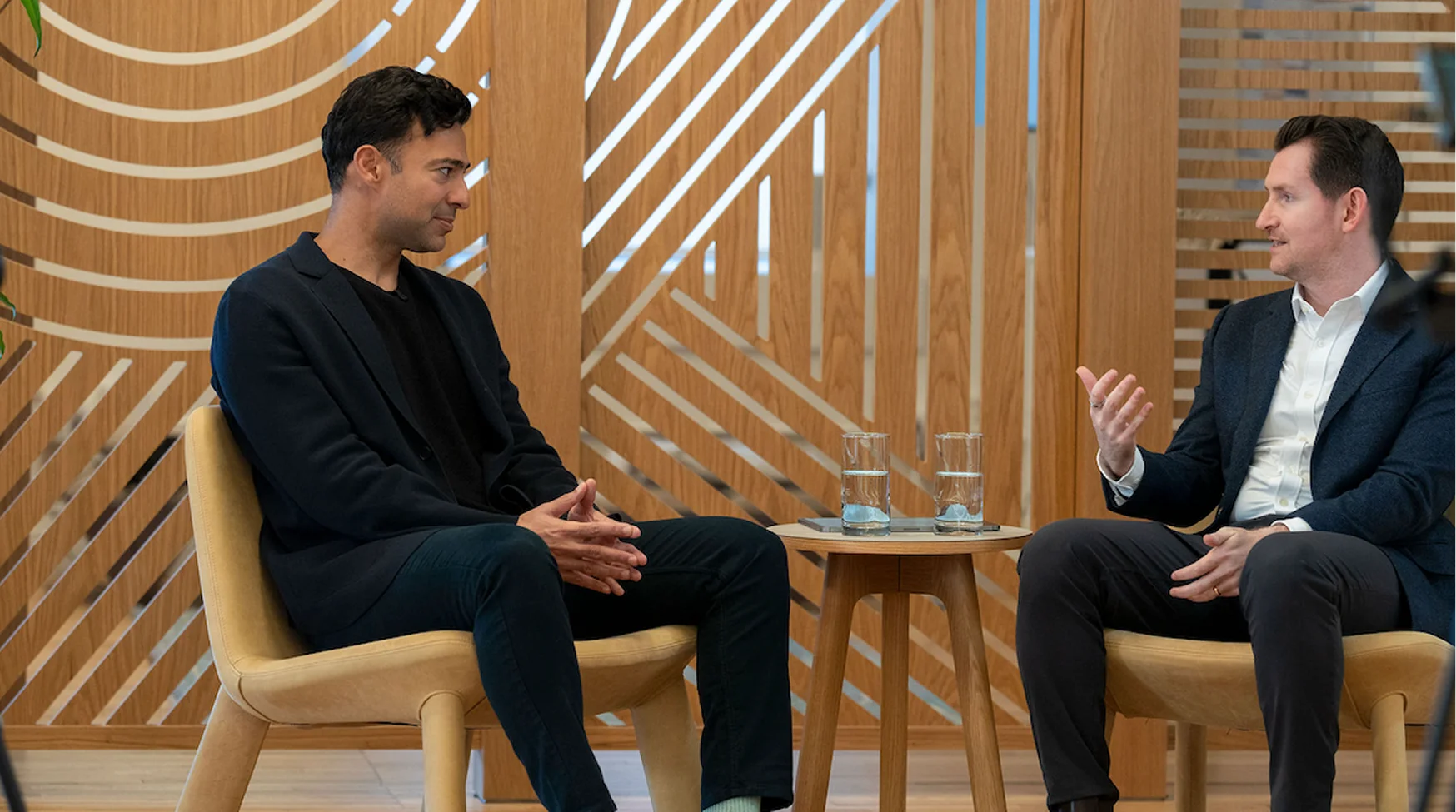
Watch M13 managing partner Latif Peracha’s conversation with Nominal co-founder and CEO Cameron McCord on The Flywheel to hear more about building an industrial AI company, working with government and commercial customers, and the leadership lessons Cameron learned in the Navy.
Read the full funding announcement and learn more at nominal.io.
Follow Nominal
Nominal is headquartered in Austin, with offices in Los Angeles, New York, Seattle, Washington, D.C., and London. Follow Nominal on LinkedIn and X, and follow co-founders Cameron McCord, Bryce Strauss and Jason Hoch for updates.
The views expressed here are those of the individual M13 personnel quoted and are not the views of M13 Holdings Company, LLC (“M13”) or its affiliates. This content is for general informational purposes only and does not and is not intended to constitute legal, business, investment, tax or other advice. You should consult your own advisers as to those matters and should not act or refrain from acting on the basis of this content. This content is not directed to any investors or potential investors, is not an offer or solicitation and may not be used or relied upon in connection with any offer or solicitation with respect to any current or future M13 investment partnership. Past performance is not indicative of future results. Unless otherwise noted, this content is intended to be current only as of the date indicated. Any projections, estimates, forecasts, targets, prospects, and/or opinions expressed in these materials are subject to change without notice and may differ or be contrary to opinions expressed by others. Any investments or portfolio companies mentioned, referred to, or described are not representative of all investments in funds managed by M13, and there can be no assurance that the investments will be profitable or that other investments made in the future will have similar characteristics or results. A list of investments made by funds managed by M13 is available at m13.co/portfolio.
At a glance
There are no Cinderella stories. Blockbuster venture successes are always preceded by years of sleepless nights.”
There are no Cinderella stories. Blockbuster venture successes are always preceded by years of sleepless nights.”
—Sarah Tomolonius, M13 Partner & Head of Investor Relations


© 2026 M13. All rights reserved.


